by popadmin | Jun 4, 2021 | Parish Life
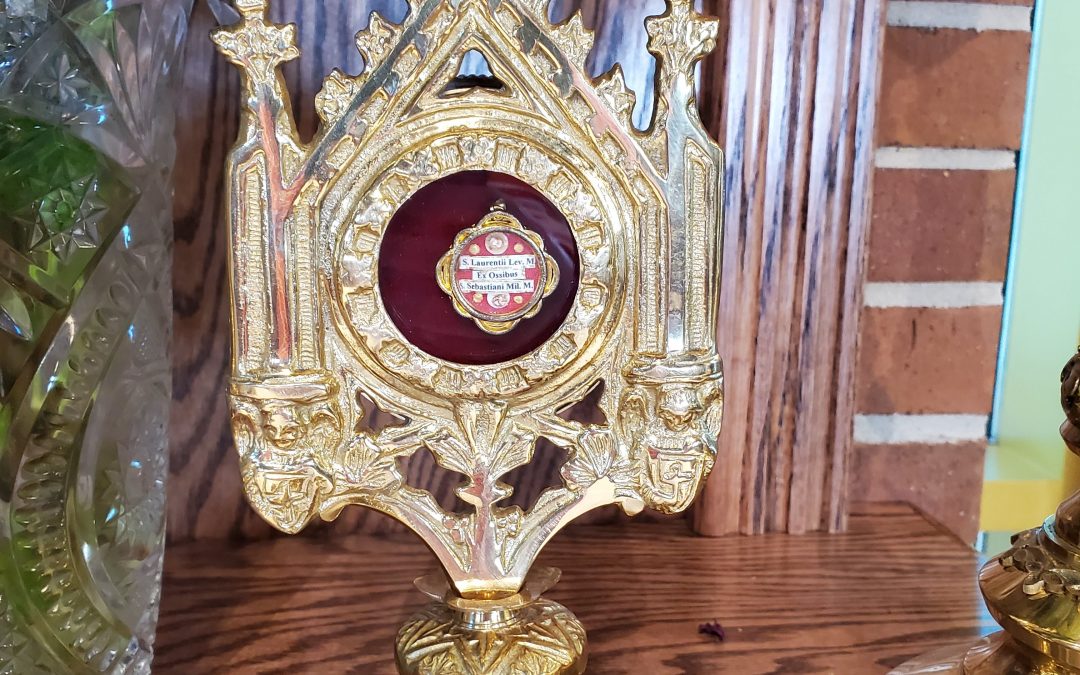
The relics on our altars on solemn occasions and in our altar:
High Altar:
Gabriel of the Sorrowful Mother
Cecilia
Francis of Assisi
Mother Teresa
Lawrence
Sebastian
Altar of Sacrifice:
Bl FX Seelos
Therese of Lisieux
Peter
Augustine
Inside Altar:
Linus
Callistus
Pius X
St Elizabeth Ann Seton
by popadmin | Jun 2, 2021 | Bulletin
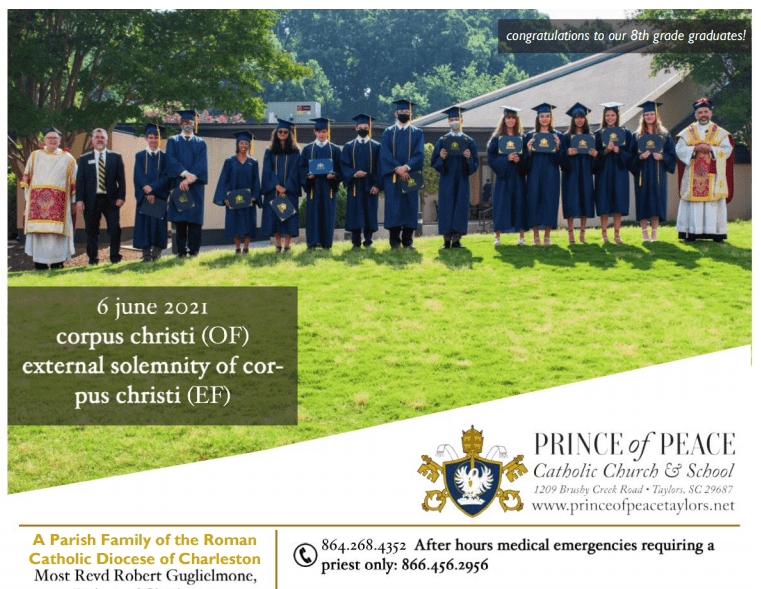
Click to read this weekend’s bulletin: 6 June 2021 Bulletin
by popadmin | Jun 2, 2021 | Letters
Active Parishioner Status and Letters of Good Standing
In order to be considered an active parishioner of Prince of Peace, you must do the following for at least six months:
- Register in the parish with the registration form found online or in the narthex
- Assist at Mass at Prince of Peace at least 75% of all Sundays and Holy Days.
- Contribute financially and by being an active part of parish life
- Use the envelope system to track attendance, even if your financial contribution is by electronic means, if you are ever going to need a letter of good standing. In the future, if an electronic means of check in is provided, that suffices for Mass attendance tracking.
A letter of good standing from Prince of Peace indicates that the records of the parish indicate fulfillment of all requirements for active parishioner status for at least six months. A letter of good standing is necessary for the following:
- to have a baby baptized in any Catholic church
- to serve as a godparent at baptism or sponsor at confirmation in any Catholic church
- to get married in any Catholic church
- to receive the active parishioner discount at Prince of Peace Catholic School
Active members are marked inactive in the rolls of the parish:
- if requested
- if after six months there is no trackable giving or envelope usage
All Catholics aged 18 or older should register under their own name with the parish they consider their spiritual home. Catholics over the age of 18 who consider Prince of Peace their spiritual home, but are under their parents’ care and are away at school, military or civil service, should register in the parish and indicate that fact for our records.
Sick, homebound, or shut-in parishioners who are unable to fulfill the requirements for active parishioner status will not be marked inactive if they or their families communicate to the parish that they wish to remain active.
Inactive parishioners who may not qualify for a letter of good standing may always receive the sacraments of Holy Communion, Penance, Anointing of the Sick, as well as receive ecclesiastical funerals and burials. They will not be allowed to receive the sacraments of Baptism or Matrimony, serve as a godparent for Baptism or Confirmation, or receive the parishioner discount in the school, until six months of active parishioner status has been demonstrated.
These policies are almost universal in the United States, where they are a local means of applying certain dispositions of canon law to protect the integrity of the sacramental order. They are part of the ecclesiastical discipline of the Church which expects adult Catholics to be mature and active members of their parish family, indicating a minimum level of practice to receive the sacraments.
Please remember that the letter of good standing is not issued based on any particular priest’s recollection of your Mass attendance; it is based on 75% Mass attendance each Sunday using the envelope system and recorded by the parish. Some people give weekly, biweekly, monthly, quarterly, or even yearly. The letter of good standing is based, not on the frequency or amount of giving (although that should reflect a mature understanding of biblical principles of stewardship), but on Mass attendance. Now that more and more people are using electronic forms of giving, there has to be a way to track weekly Mass attendance. Right now, the only way to do this is by the use of envelopes.
If you give electronically, you may drop your offertory envelope with a 0-online giving note in the offertory basket when you come. If you forget your envelope, there are some available on the credenzas in the narthex. We have a subcommittee of the parish staff looking into the possibility of electronic forms of check-in for Sunday Mass attendance; when we decide on a platform for that, this policy will be updated and the faithful notified.
Sometimes people have specific individual or family situations that mean that one or more four requirements for active parishioner status is not possible or unduly burdensome. If you communicate in a general way to the parish office the reason for that situation, we can notate our records to that effect, so that you will not be rendered inactive if you wish to remain active.
If you change your address, email address, or phone number, please notify the parish as soon as possible. If you move away from the parish, then please do so as well.
Thank you in advance for your cooperation with these policies. They are not there to make life burdensome. Instead, they are part of that ecclesiastical discipline which is a sign of true communion of heart and mind with your local Church and a maturity of faith measured, not in terms of minimalism, but authentic Catholic practice
Policy updated as of June 2022.
by popadmin | Jun 1, 2021 | CIC Saint Writeups
11 June: Solemnity of the Most Sacred Heart of Jesus. This Solemnity is celebrated on the Friday after the Feast of Corpus Christi. The Sacred Heart is depicted as a flaming heart surrounded by a crown of thorns, with a cross on top and bleeding from a wound. (It is often displayed with the Immaculate Heart of Mary, which is also on fire, surrounded by a crown of flowers and pierced by a sword.) This feast was celebrated in seventeenth century France at the request of St. John Eudes. But the history of this devotion goes much farther back; it was highlighted by the fathers of the Church, including Origen, St. Ambrose, St. Jerome, St. Augustine, St. Hippolytus, St. Irenaeus, St. Justin Martyr, and St. Cyprian. This devotion was also given form in the 12th century by St. Bernard of Clairvaux in his famous “O Sacred Head Surrounded.” In 1673, Jesus appeared to a French nun, St. Margaret Mary Alacoque. He told her that he wished to be honored in Eucharistic adoration during a holy hour on Thursdays, that he desired a feast day devoted to his Sacred Heart, and that he desired the faithful to receive Holy Communion on first Fridays. It took years, but eventually devotion to the Sacred Heart spread throughout the world. In 1856, Pope Pius IX established the Feast of the Sacred Heart as obligatory for the whole Church.
12 June: Feast of the Immaculate Heart of Mary. In the midst of WWII, Pope Pius XII put the whole world under the protection of our Savior’s Mother by consecrating it to her Immaculate Heart. He decreed that the Church should celebrate the Feast of the Immaculate Heart of Mary so as to obtain by her intercession “peace among nations, freedom for the Church, the conversion of sinners, the love of purity and the practice of virtue” (Decree of May 4, 1944). This is not a new devotion; in the seventeenth century, St. John Eudes preached it together with that of the Sacred Heart; in the nineteenth century, Pius VII and Pius IX allowed a feast of the Pure Heart of Mary. In Scripture, Simeon’s prophecy portrayed Mary with her heart pierced with a sword; and at the foot of the Cross, we are shown the Heart of Mary. Mary was not merely passive at the crucifixion, “she cooperated through charity” as St. Augustine says, “in the work of our redemption.”
Both of these feasts use the heart as a symbol of love. In the Sacred Heart, the emphasis is on God’s love and mercy. Love so intense that the symbol is a human heart encircled with a crown of thorns, crowned with a cross, and radiating flames: this is how much Christ loves us. Devotion to the Immaculate Heart stems from Mary’s privileged status as the Mother of God. She provides a model for what our own hearts should look like. Devotion to the Sacred Heart is one of gratitude for Jesus’ great love for us; devotion to the Immaculate Heart indicates our desire to emulate the way in which Mary loves Jesus.
Ideas for celebrating these feast days at home:
(sources: teachingcatholickids.com; The Catholic All Year Compendium; Catholic Encyclopedia, 1913 ed.; catholicculture.org)
by popadmin | May 31, 2021 | CIC Saint Writeups
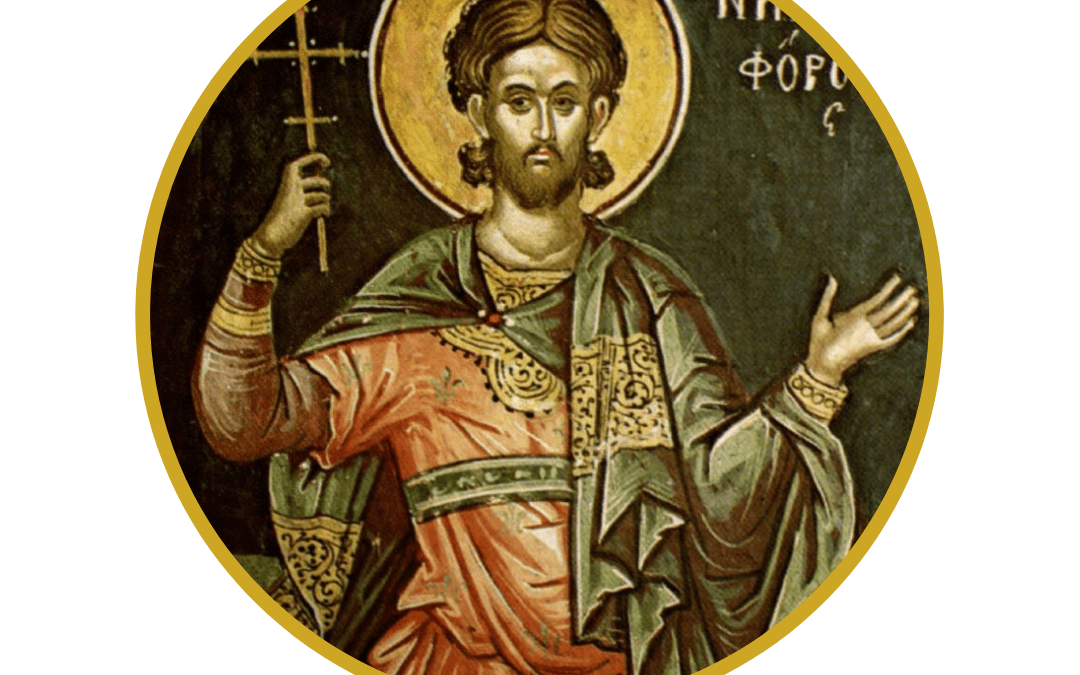
1 June: Feast of Saint Justin. Justin is one of the most important Christian writers of the early Church. Born in the year 100 in the Palestinian province of Samaria, Justin was the son of pagan Greeks who provided him with an excellent education. Justin was interested in philosophy and looked for truth in various schools of thought. He became frustrated with philosophers’ intellectual conceits, limitations, and indifference to God. After years of study, Justin had a life-changing encounter with an old man who urged him to study the Jewish prophets, who had spoken by God’s inspiration and predicted the coming of Christ and foundation of His Church. “Above all things, pray that the gates of life may be opened to you,” the man told Justin, “for these are not things to be discerned, unless God and Christ grant to a man the knowledge of them.” Justin studied Christianity and was baptized at age 30. From then on, he studied Holy Scripture day and night, his soul filled with divine fire. As a Christian, he wrote many books explaining and propagating the Christian faith. Among the most famous are his two Apologies or Defenses of the Faith, which argued against the claims of Jews, pagans, and non-Christian philosophers. Several of his works were written to Roman officials, to refute lies about the Church and to end persecution of Christians. Justin’s writings give explicit descriptions of the early Church’s beliefs and modes of worship. In modern times, scholars note that Justin’s descriptions correspond to the traditions of the Church on every essential point. Justin describes the Sunday liturgy as a sacrifice, speaks of the Eucharist as the true body and blood of Christ (stating only baptized persons free of serious sin may receive it), and describes celibacy as a sacred calling. His first defense of the faith, written around 150, convinced the emperor to regard the Church with tolerance. In 167, persecution began again under Emperor Marcus Aurelius. Justin was seized and brought before the prefect of Rome. An eyewitness tells how Justin the philosopher became known as “St. Justin Martyr.” The prefect stated how Justin might save his life: “Obey the gods, and comply with the edicts of the emperors.” Justin responded: “No one can be justly blamed or condemned for obeying the commands of our Savior Jesus Christ.” Rusticus demanded, “Hear me, you who are noted for your eloquence… If I cause you to be scourged from head to foot, do you think you shall go to heaven?” Justin replied, “If I suffer what you mention, I hope to receive the reward which those have already received, who have obeyed the precepts of Jesus Christ. There is nothing which we more earnestly desire, than to endure torments for the sake of our Lord Jesus Christ… We are Christians, and will never sacrifice to idols.” Justin was scourged and beheaded along with six other believers. St. Justin Martyr has been regarded as a saint since the earliest centuries of the Church. He is the patron of apologists, lecturers, orators, philosophers.
Ideas for celebrating this feast at home:
- St. Justin was a prolific writer for the early church. Read his writings here. Read more about St. Justin’s life and his martyrdom.
- Greek food ideas for Justin’s feast: Greek salads, pita with hummus and tzatziki, olives, grilled meat or fish (or grilled kabobs), gyros, Spanakopita… Click here for recipe ideas. Don’t forget to incorporate the martyrs’ liturgical color of red on your table (candles, tablecloths, etc)
- Justin had a great love of Holy Scripture and is said to have had it in his hands day and night. Use his feast to rekindle your love of Scripture. Try reading just a little every day. Read passages out loud to your children.
- An apologist is not someone who apologizes for their faith, but rather someone who explains and defends the Faith. We are exhorted in 1 Peter 3:15 to “Always be prepared to make a defense to anyone who calls you to account for the hope that is in you.” May Saint Justin, brave apologist, inspire us to defend and learn more about our Catholic Faith each and every day.
(sources: catholicculture.org; catholicnewsagency.com; excerpts from The Liturgical Year by Abbot Gueranger)
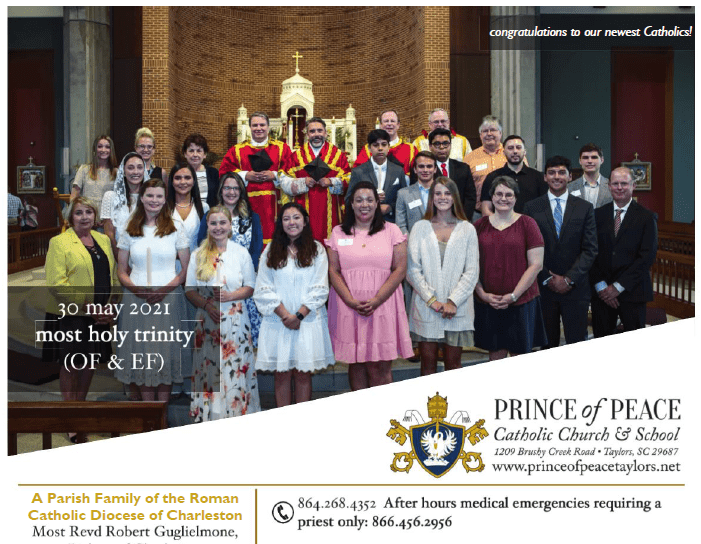
by popadmin | May 27, 2021 | Bulletin
Click to read this week’s bulletin: 30 May 2021 Bulletin
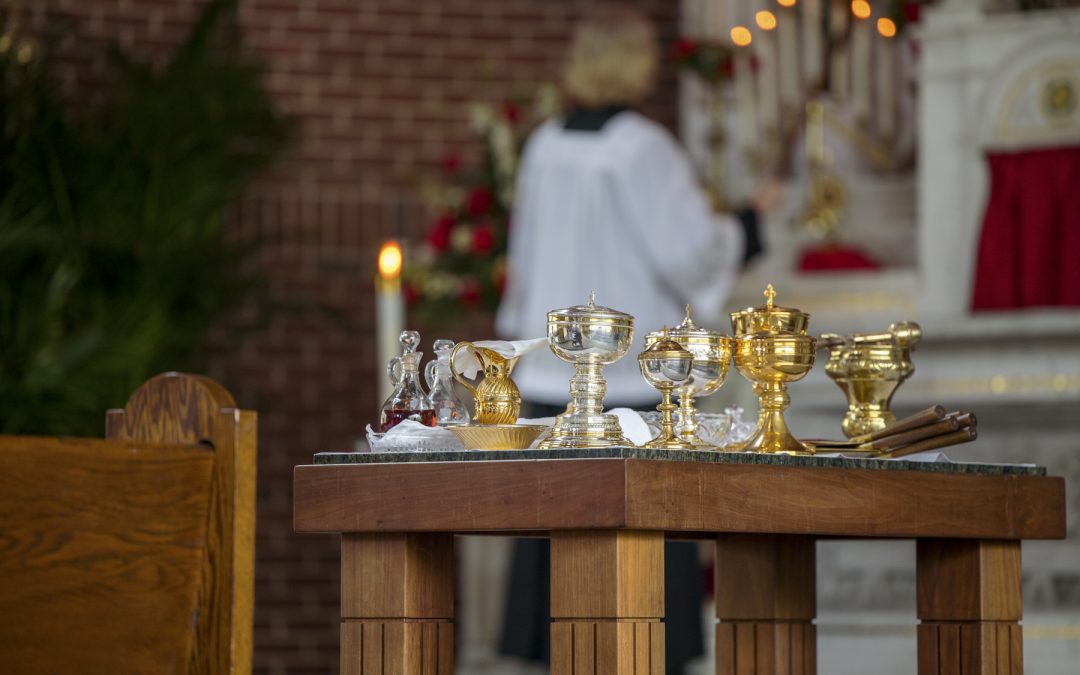
by popadmin | May 23, 2021 | The Latest
My Dear Brothers and Sisters in Christ,
The time will soon come when we may return to public worship without fear of the coronavirus, and so effective June 5, when we celebrate the feast of Corpus Christi, the general dispensation from the obligation to attend Sunday Mass will end.
Individual dispensation, for those who are still at risk of grave illness and for their caretakers, will remain in place. These include but are not limited to caring for the sick, homebound, or infirm, those who exhibit flu-like symptoms or who are in the high-risk category.
We closed our churches and schools in March 2020 because it was the responsible thing to do, and it was important to follow local, state, and national health ordinances. We were able to resume public worship with safety precautions in place in May, and our Catholic schools opened for in-person instruction in the fall. We have learned how to live with this virus and to find a way through it together.
I am grateful to all of you for the patience and generosity you demonstrated during this difficult year, and it is our goal to make public worship accessible to everyone while still providing options for distancing and safety. Because we will be dealing with it for many years to come, it is important for everyone 12 year of age or older receive the vaccinations which are now available, both for the health of our communities and our shared life in the faith. It is not sinful in any way to receive any of the three COVID-19 vaccines.
As Catholics, we attend Mass to gather as a community that believes in Christ Jesus, and especially to receive our Lord in the Most Holy Eucharist. It is the source and summit of the Christian faith and life. I pray that you and your family will be restored and nourished by returning to the Table of the Lord.
Please pray for your priests who have worked so diligently throughout this pandemic and know that my prayers remain with you and your families.
In the Lord’s Peace,
Most Reverend Robert E. Guglielmone, DD
Bishop of Charleston
At Prince of Peace Catholic Church, a live broadcast of the 10a OF Sunday Mass will be streamed to the PAC with Communion Service for those who are in extraordinary circumstances requiring strict social distancing and mask wearing. In some situations where technology fails, audio only may be offered with Communion Service. Both will fulfill the obligation to attend Mass.
by popadmin | May 23, 2021 | CIC Saint Writeups
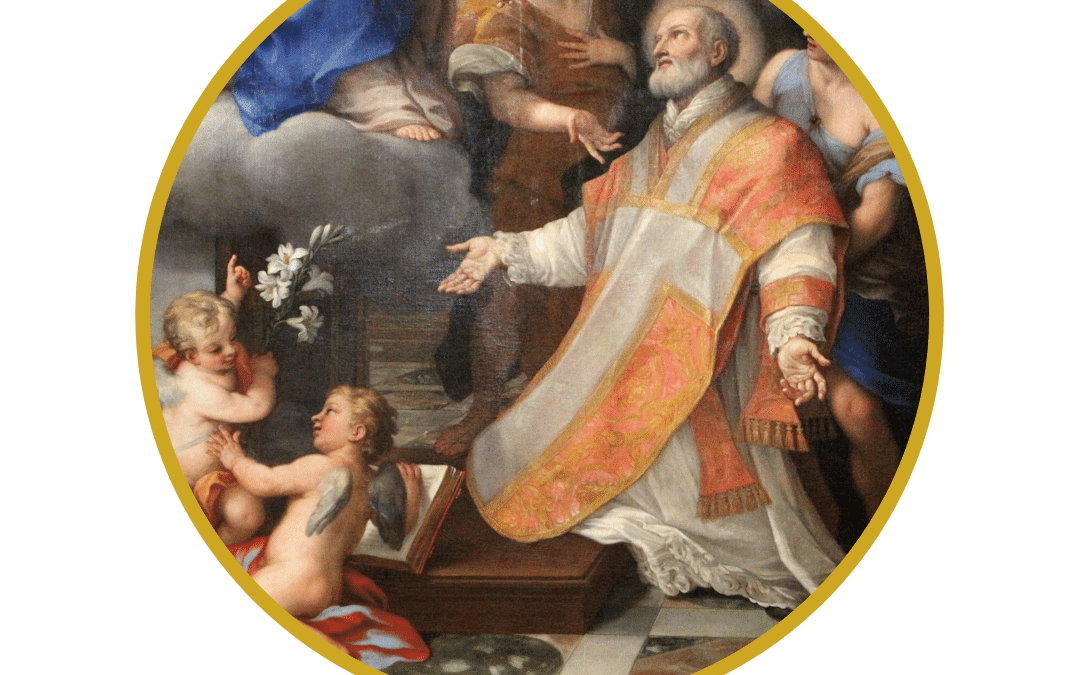
26 May: Feast of Saint Philip Neri. Born in 1515, Philip Neri gave up material wealth at the age of 17 and chose to serve God instead of a career in business. He went to Rome and studied philosophy and theology until he thought his studies were interfering with his prayer life. He then threw away his books. After dark he would go to the catacombs to pray. One night, he felt a globe of light enter his mouth and sink into his heart. This gave him so much energy to serve God that he went out to work at the hospital of the incurables and starting speaking about God to everyone from beggars to bankers. Philip found the city of Rome suffering great spiritual deterioration due to ill effects of the Renaissance. Philip committed to re-evangelize Rome. He began with the youth. Philip did pilgrimages for children to keep them out of trouble. He took them to the seven churches of the city, talking all the way and opening their hearts with his joyful spirit. (The practice of pilgrimage to the seven churches is still followed, especially on Holy Thursday.) Philip also reached out to businessmen, giving talks on theology and religion, followed by prayers. These gatherings grew in great numbers. After his ordination into the priesthood, Philip remained a champion of the Faith. He instituted the devotion known as Forty Hours, in which the Blessed Sacrament is exposed for 40 hours while continuous prayer is made. He established a group of priests, the Oratorians. St. Philip was known for his burning love of God. So ardently did this fire of divine love affect him that once during Pentecost the beating of his heart broke two ribs. It was a wound that never healed. For years, Philip worked tirelessly in Rome. He revived the practice of frequent Holy Communion. He promoted frequent confession, himself spending hours a day in the confessional. As a confessor he was in great demand; among his penitents was St. Ignatius. Philip made himself available to everyone at any hour, even at night. He said: “They can chop wood on my back so long as they do not sin.” Humility was the virtue he most tried to teach others and to learn himself. When one man asked if he could wear a hair shirt, Philip said yes – if he wore the hair shirt outside his clothes! The man obeyed and found humility in the jokes he received. There are stories of Philip himself wearing ridiculous clothes or walking around with half his beard shaved off. The greater his reputation for holiness the sillier he would be for the sake of humility. On the Feast of Corpus Christi in 1595, Philip’s doctor told him his health was poor. Philip realized it was his time to go to God. The rest of the day, he listened to confessions as normal. Before heading to bed, Philip stated, “Last of all, we must die.” That night, Philip suffered a heart attack and died. Four years later, his body was exposed and found in good condition. It was moved to the new Oratorian Church, Chiesa Nuova, where it rests today. He was beatified by Pope Paul V in 1615. In 1622, Pope Gregory XV canonized St. Philip Neri with the title “The Apostle of Rome.” He is the patron saint of Rome, United States Army Special Forces, humor and joy.
“Cheerfulness strengthens the heart and makes us persevere in a good life. Therefore the servant of God ought always to be in good spirits.” – St. Philip Neri
Ideas for celebrating this feast at home:
- Click here to read quotes from St. Philip; print one to hang on your wall.
- Download a St. Philip Neri activity for kids here.
- St. Philip Neri was known for his sense of humor. Today, try to laugh at yourself when something annoying happens. Try to make someone else happy with your cheerful disposition or loving act of service. Tell jokes and share smiles around the dinner table.
- St. Philip’s favorite feast was Corpus Christi: make a visit to Jesus in the Blessed Sacrament.
(sources: catholic.org, saintsfeastfamily.com, The Church’s Year of Grace by Pius Parsch)
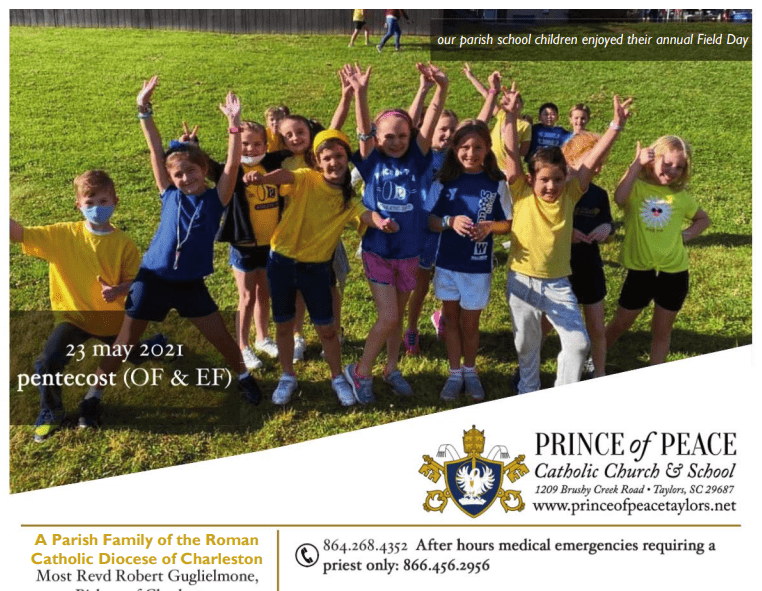
by popadmin | May 20, 2021 | Bulletin
Click to read the 23 May 2021 Bulletin!

by popadmin | May 16, 2021 | CIC Saint Writeups
22 May: Feast of Saint Rita of Cascia. In the hills of Cascia, Italy, Antonio and Amata Lotti welcomed their only child, Margherita, in 1381. Her name meant “pearl” and she was called Rita. Growing up in Cascia, Rita knew the local Augustinian nuns and was attracted to their way of life. But her parents arranged a marriage to provide security, and so Rita obediently married Paolo Mancini with whom she had two sons. In the troubling political climate, there was often conflict between families. Paolo was the victim of one conflict, and was murdered. The societal expectation was that the boys should avenge father’s murder. Rita forgave her husband’s killers. She faced a steep challenge in convincing her sons to do the same. She pointed to the image of the crucified Christ and the fact that he forgave those who killed him. Soon, however, both sons died of illness. Trusting God after these tragedies, Rita felt called to a second vocation: religious life. The sisters at the Monastery were hesitant and refused her request, because although Rita had forgiven her husband’s killers, family had not. There were members of the rival family in the convent; her presence would be detrimental to community harmony. And so, Rita set out to make peace between the families. She went to her husband’s family and exhorted them to put aside hostility. They were convinced by her courage. The rival family, astounded by this, also agreed. The families exchanged a peace embrace and signed an agreement, putting the vendetta to rest forever. At age 36, Rita finally was accepted into the Augustinian convent. She lived a life of prayer, contemplation and spiritual reading for 40 years. On Good Friday of 1442, she had an extraordinary experience. In contemplation before an image of Jesus, she was deeply moved and spoke her willingness to relieve Christ’s suffering by sharing in his pain. Her offer was accepted, and Rita was given a thorn from his crown penetrating her forehead. The wound it caused remained open until her death. Toward the end of her life, Rita was visited by a relative who asked if there was anything she could do. Rita asked for a rose from the garden of her family home. It was January, the dead of winter, but upon arrival at Rita’s family garden, the relative astonishingly found a fresh rose in the snowy garden. She brought the miraculous rose to Rita, who died peacefully on May 22, 1457. The convent bells immediately began to peal unaided by human hands. So many people came to look upon the gentle face of the “Peacemaker of Cascia” that her burial had to be delayed. It became clear that something exceptional was occurring as her body was free from nature’s usual course. It is still incorrupt today, in a glass coffin in the basilica of Cascia, where numerous miracles have been wrought. On May 24, 1900, Pope Leo XIII canonized St. Rita, heralding her as the saint of impossible and desperate cases. St. Rita’s Church at Cascia was raised to the ranks of a basilica, September 11, 1955, by Pope Pius XII.
Ideas for celebrating this feast at home:
- In honor of her name, make “Margherita” Pizza for dinner (recipe here!) Really, any Italian themed meal would be fitting.
- Plant a rose bush in your yard: roses are one of the symbols associated with St. Rita.
- Read the address that Pope St. JP II gave on the 100th anniversary of St. Rita’s canonization: link here.
· Go to confession: exemplified by forgiveness of her husband’s murderers, Saint Rita is patroness of reconciliation.
· Peacemaking: the Saint of Cascia didn’t just forgive, she helped two rival families set aside a vendetta and make peace. Is there a person you need to make peace with? Be inspired by Saint Rita to do it today.
· Play a game of baseball! St. Rita has been loosely associated with the game of baseball. If you’re not convinced that an unofficial patron can help you out in the bottom of the ninth, remember that Saint Rita is also the Patroness of Impossible Causes!
(sources: excerpts from “The Precious Pearl” by Fr. Michael DiGregorio; stritashrine.org)
Recent Comments