EF Funeral Request
The following document must be completed and original copy returned to the parish office by the person who desires a funeral and burial according to the Extraordinary Form.
The following document must be completed and original copy returned to the parish office by the person who desires a funeral and burial according to the Extraordinary Form.
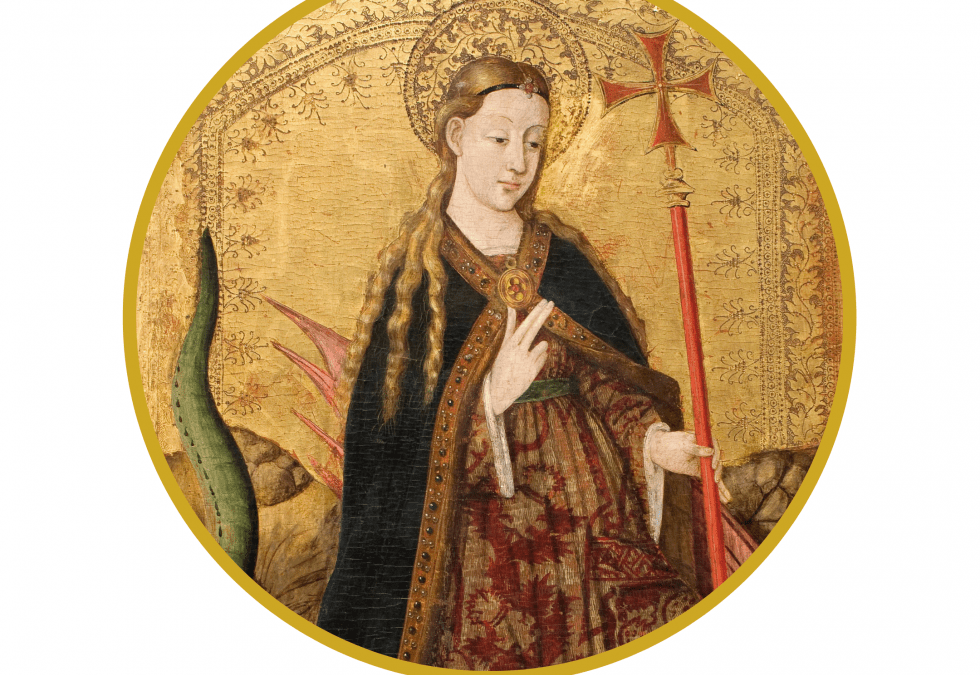
16 November: Saint Margaret of Scotland. Born in Hungary in 1046, Margaret was the great-niece of Saint Edward the Confessor. She was a Saxon princess, raised in Hungary where her father was living in exile. She spent her childhood there as an unusually devout and pious girl. The family eventually went to England, when her father was called to high office by his uncle, King Saint Edward III. Margaret’s father died suddenly. She and her mother had to flee yet again; this time to the court of Malcolm, the King of Scotland. Upon instructions from her mother, Margaret married King Malcolm in 1069. The country was blessed by her holy life and deeds of charity for the next thirty years. Margaret had eight children and proved to be a model mother and exemplary queen who brought up pious children. She zealously trained her children in the practice of Christian virtues. Margaret also worked hard to improve the morality of her subjects. In the midst of royal splendor, Margaret chastised her flesh by mortification and vigils and often passed the greater part of the night in devout prayer. Her most remarkable virtue was love of neighbor, particularly love toward the poor. Her alms supported countless unfortunates; daily she provided food for three hundred souls and shared in the work of serving them personally, washing their feet and kissing their wounds. Queen Margaret of Scotland is the secondary patroness of Scotland. She is also the patron saint of large families, learning, queens, widows, and the death of children. St. Margaret’s copy of the Gospels is preserved in the Bodleian Library at Oxford University.
Ideas for celebrating this feast day at home:
Today, 16 November, is also the Feast of Saint Gertrude the Great. Gertrude was a Cistercian nun from medieval times. She was born in 1256 at Eisleben and at the age of five was taken to the convent at Rossdorf. In spite of much ill-health, Gertrude used her exceptional natural talents well; she knew Latin fluently and wrote prolifically. When she was twenty-five years old, Christ began to appear to her and to disclose to her the secrets of mystical union. Obeying a divine wish, she put into writing the favors of grace bestowed upon her. Her most important work, Legatus Divinae Pietatis, “The Herald of Divine Love,” is distinguished for its theology and poetry. How it stimulates love of God can be felt only by reading it; Abbot Blosius is said to have read it twelve times each year. Saint Gertrude was one of the first to have stressed devotion to the Sacred Heart of Jesus. She died in 1302, more consumed by the fire of God’s love than by her fever. Read more about the Life of Saint Gertrude in this book. Learn a prayer in Latin on her feast day. Renew your own devotion to the Sacred Heart of Jesus today.
Click to read this week’s bulletin: 14 November 2021
Click here to read this week’s bulletin: 7 November 2021 Bulletin
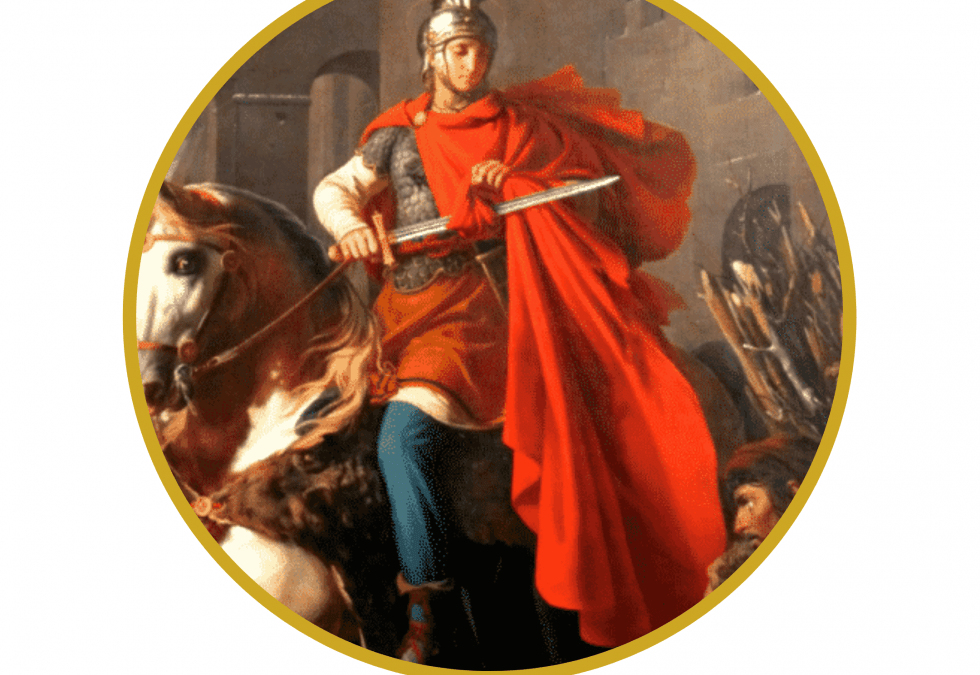
11 November: Saint Martin of Tours. Born to pagan parents, this son of a veteran was forced at the age of 15 to serve in the army. Martin was baptized a Christian at age 18. He lived more like a monk than a soldier. One of the most famous stories associated with Martin happened while he was in the army: Martin came across a poor, naked beggar at the gates of Amiens who asked alms in Christ’s Name. Martin had nothing with him except his weapons and soldier’s mantle; but he took his sword, cut his own cloak in two, and gave half to the poor man. That night, Christ appeared to him clothed with half a mantle and said, “Martin, the catechumen, has clothed ME with his mantle!” At age 23, Martin refused a war bonus and requested dismissal from the army. He told his commander: “I have served you as a soldier; now let me serve Christ. Give the bounty to those who are going to fight. But I am a soldier of Christ and it is not lawful for me to fight.” He was accused of cowardice and after great difficulty, was discharged. Martin then dedicated himself to God’s work. He traveled to Tours where he began studying under Hilary of Poitiers (a doctor of the Church). Martin was ordained as an exorcist. Martin also became a monk. He established a French monastery near Poitiers. He lived there for 10 years, forming his disciples and preaching throughout the countryside. The people of Tours demanded he become their bishop. Martin did not wish it (was so reluctant that he hid in a barn full of geese which honked loudly and gave him away!!!). He thus reluctantly became bishop of Tours and served faithfully. Along with St. Ambrose, Martin rejected putting heretics to death. He worked against the Arian heresy, paganism, and the Druid religion. He was an extraordinary evangelist and won many to the Christian faith. Once the devil appeared to him and spoke as if he were Christ. Martin recognized the deceit. Three dead persons he raised to life. When he was an old man, Martin fell into a painful fever. Although he longed for Heaven, Martin prayed: “Lord, if your people still need me, I do not refuse the work. Your will be done.” Sick and suffering, he was called to heaven on November 11, 397. Saint Martin is a patron of the poor, soldiers, horsemen, alcoholics, tailors, and winemakers.
Ideas for celebrating this feast day at home:
All of these traditions are based on the fact that St. Martin cut his cloak in half and gave it to a beggar. The perfect way to celebrate this feast would be to help the needy. Participate in a coat drive, donate to a local shelter, help our parish Triune Mercy Kitchen or St. Vincent de Paul as they serve the needy in our own community.
Click to read this week’s bulletin: 31 October 2021 Bulletin
In England, saints or holy people are called “hallowed” (deriving from the Old English word meaning holy or sanctified). Hence the name “All Hallows’ Day” for the Feast of All Saints. The evening before the feast became popularly known as “All Hallows’ Eve” or even shorter, “Hallowe’en”.
Many recipes and traditions have come down for this evening, such as pancakes, boxty bread, barmbrack (Irish fruit bread), colcannon (cabbage and boiled potatoes). This was also known as “Nutcrack Night” in England, where family gathered around the hearth to enjoy cider, nuts, and apples. “Soul cakes” are another traditional food. People would go begging for a “soul cake” and in exchange would promise to pray for the donor’s departed friends and family: an early version of today’s “Trick or Treat.”
(Sourced/Cited from theCatholicCompany.com)
Recent Comments